
The Rise of Alternative Credit Scoring: How AI and Alternative Data Are Reshaping the Credit Landscape
In recent years, the credit industry has undergone a silent revolution—one driven not by new banking regulations, but by artificial intelligence (AI) and alternative data analytics. Traditional credit scoring systems like FICO and VantageScore, while deeply entrenched, are no longer the only tools lenders rely on. Today, innovative lenders and fintech firms are leveraging machine learning models and non-traditional data sources to evaluate borrower risk more accurately and inclusively. This transformation has redefined how creditworthiness is measured, who gets access to credit, and how financial systems perceive risk in the modern economy.
Understanding the Shift from Traditional to Alternative Credit Scoring
The Limitations of Legacy Credit Systems
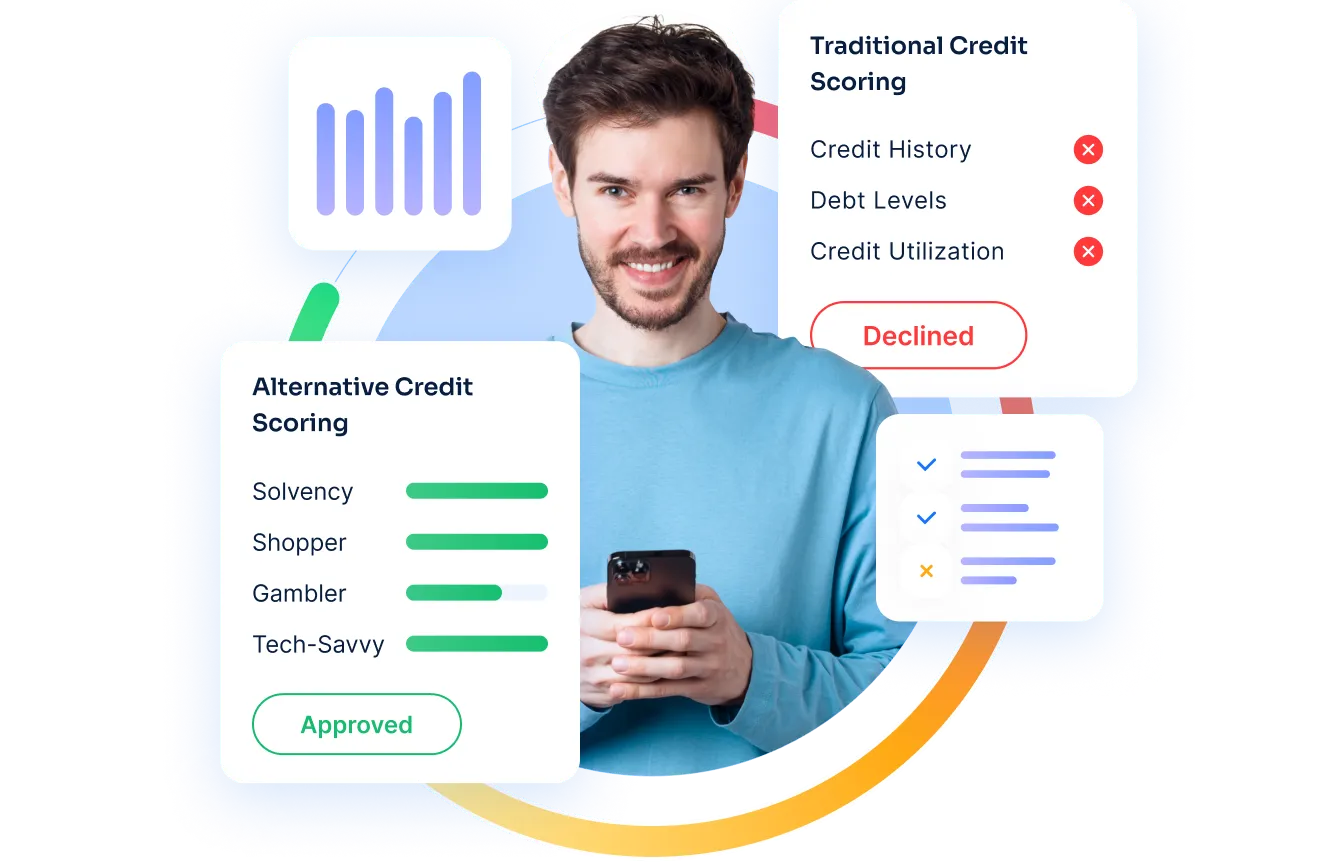
Traditional scoring models rely heavily on credit bureau data, including repayment history, credit utilization, account age, and credit inquiries. While this system works for consumers with long-standing credit histories, it leaves millions of people—known as “credit invisibles”—without access to fair credit assessment.
Groups like immigrants, gig economy workers, and young adults often struggle to build credit profiles, even if they display consistent financial discipline. Legacy systems are ill-equipped to evaluate financial reliability when no traditional data exists. This creates a credit exclusion gap, where responsible individuals are denied financial access simply due to a lack of history rather than risk.
The Emergence of Alternative Data
Alternative data has emerged as a powerful tool to fill this gap. It refers to information that goes beyond what credit bureaus typically collect. Examples include:
-
Utility and telecom payments (electricity, water, internet, phone bills)
-
Rental payment records
-
E-commerce spending behavior and digital wallet transactions
-
Employment stability and income data from payroll or gig platforms
-
Insurance premiums, tax records, and even subscription services
This broader data ecosystem enables lenders to view borrowers through a holistic financial lens rather than a limited snapshot based on traditional credit history.
The Role of Artificial Intelligence in Credit Innovation
Machine Learning Models in Credit Assessment
AI has revolutionized how lenders interpret data. Machine learning (ML) algorithms can process thousands of data variables in real time, identifying subtle correlations between behaviors and repayment patterns. Unlike static scoring models, AI-driven systems continuously learn and adapt, making risk predictions more dynamic and precise.
For example, an ML model might find that consistent rent payments and low cash-flow volatility strongly indicate creditworthiness—even in the absence of a credit card history. By analyzing diverse and complex datasets, these models create predictive credit profiles that outperform conventional scores in both accuracy and inclusiveness.
Bias Reduction and Fairness Challenges
One of the main criticisms of traditional credit systems is bias—often unintentional but deeply embedded. Factors such as ZIP codes or employment types can inadvertently penalize certain demographic groups. AI-driven scoring, when properly regulated and audited, can mitigate these biases by focusing on behavioral and transactional data rather than legacy markers that reflect systemic inequalities.
However, it’s essential to ensure algorithmic transparency. Poorly designed AI systems can replicate existing prejudices if they learn from biased data. Thus, fintech companies and regulators are prioritizing explainable AI (XAI) frameworks that make lending decisions interpretable and ethically sound.
The Expanding Use Cases of Alternative Credit Scoring
Inclusion of the Underbanked and Unbanked
According to the World Bank, over 1.4 billion adults globally remain unbanked. Traditional credit systems fail these populations because they lack formal financial histories. Alternative scoring allows microfinance institutions and digital lenders to offer credit based on mobile payment history, remittances, and spending consistency, thereby unlocking access to financial products like loans, credit cards, and mortgages.
Enhanced Risk Prediction for Lenders
Alternative data also benefits lenders by enabling better portfolio management. By combining behavioral, financial, and transactional signals, institutions can reduce default rates and optimize interest rates. For example:
-
Telecom data may indicate payment punctuality.
-
Social media behavior can reveal stability and engagement levels.
-
E-commerce spending can show financial responsibility trends.
Such integrations help lenders detect potential delinquencies earlier and customize offers for low-risk customers.
Personalization of Credit Products
With more granular data, lenders can craft personalized credit solutions. Instead of uniform lending policies, AI systems can tailor credit lines, interest rates, and repayment schedules to individual borrowers’ circumstances. This not only improves borrower satisfaction but also reduces churn and delinquency.
Regulatory and Ethical Considerations
The Need for Data Privacy and Transparency
The use of alternative data introduces privacy and consent challenges. Consumers must understand how their data is collected, analyzed, and used in credit decisions. Fintechs and financial institutions must comply with data protection regulations such as the GDPR and CCPA, ensuring explicit consent and secure data storage practices.
Transparency is equally crucial. Borrowers should have access to explanations for credit decisions—especially when denied. Regulatory bodies are beginning to enforce “right to explanation” standards, holding lenders accountable for fairness and clarity in algorithmic decision-making.
Standardization and Global Adoption
While countries like the U.S., U.K., and India are advancing alternative credit scoring frameworks, global adoption remains uneven. Emerging markets are experimenting with local datasets—like mobile money transactions in Africa or microloan repayments in Southeast Asia. As data ecosystems mature, there is a growing call for standardized methodologies that maintain fairness across borders while accommodating regional differences.
The Future of Credit Scoring: Predictive, Inclusive, and Dynamic
The credit ecosystem of the future will likely combine traditional metrics, alternative data, and AI-driven insights into a hybrid model that reflects a borrower’s complete financial behavior. This future envisions:
-
Dynamic credit scores that update in real time as financial activities change
-
Cross-industry partnerships between telecoms, fintechs, and banks to share verified data
-
Blockchain-powered credit ledgers that ensure transparency and fraud resistance
-
Consumer empowerment, where individuals can control and monetize their credit data
As credit scoring becomes more intelligent, it has the potential to democratize financial access, reduce systemic inequalities, and make lending both fairer and more profitable.
Conclusion
The shift toward alternative credit scoring marks one of the most significant innovations in modern finance. By leveraging AI, machine learning, and non-traditional data sources, lenders are moving beyond rigid legacy systems toward inclusive, data-driven credit evaluation. While challenges in transparency, privacy, and bias remain, the benefits—expanded access, improved risk assessment, and personalized lending—are undeniable. The credit landscape is evolving from a static past into a dynamic, adaptive ecosystem where every transaction, payment, and behavior contributes to a richer picture of financial trustworthiness.
FAQs
1. What is the primary difference between traditional and alternative credit scoring?
Traditional models rely on credit bureau data, while alternative scoring uses non-traditional information like rent, utilities, and digital transactions to evaluate creditworthiness.
2. How does AI improve credit risk analysis?
AI processes large datasets and identifies hidden correlations, enabling more accurate predictions of repayment behavior and reducing default risks.
3. Can alternative credit scoring replace traditional systems completely?
Not yet. Instead, it complements existing models to create a hybrid approach that’s both inclusive and precise.
4. Are there privacy risks associated with using alternative data?
Yes, privacy concerns exist, but compliance with global data protection laws and clear consent mechanisms can mitigate these risks.
5. How does alternative credit scoring promote financial inclusion?
It allows lenders to assess individuals with limited or no credit history, enabling fair access to loans and financial services for the underbanked.
6. What role does explainable AI (XAI) play in lending decisions?
XAI ensures that AI-driven credit decisions are transparent, interpretable, and free from hidden biases.
7. What trends will shape the future of credit scoring?
Expect greater adoption of real-time scoring, blockchain verification, global data sharing, and personalized lending models based on individual financial behavior.
Comments are closed.